The first step when you get home shouldn't feel like stepping on Legos.
By 4pm your shoes are tight, your ankles are marked and your legs feel like they belong to somebody else. It isn't fat. It isn't age.
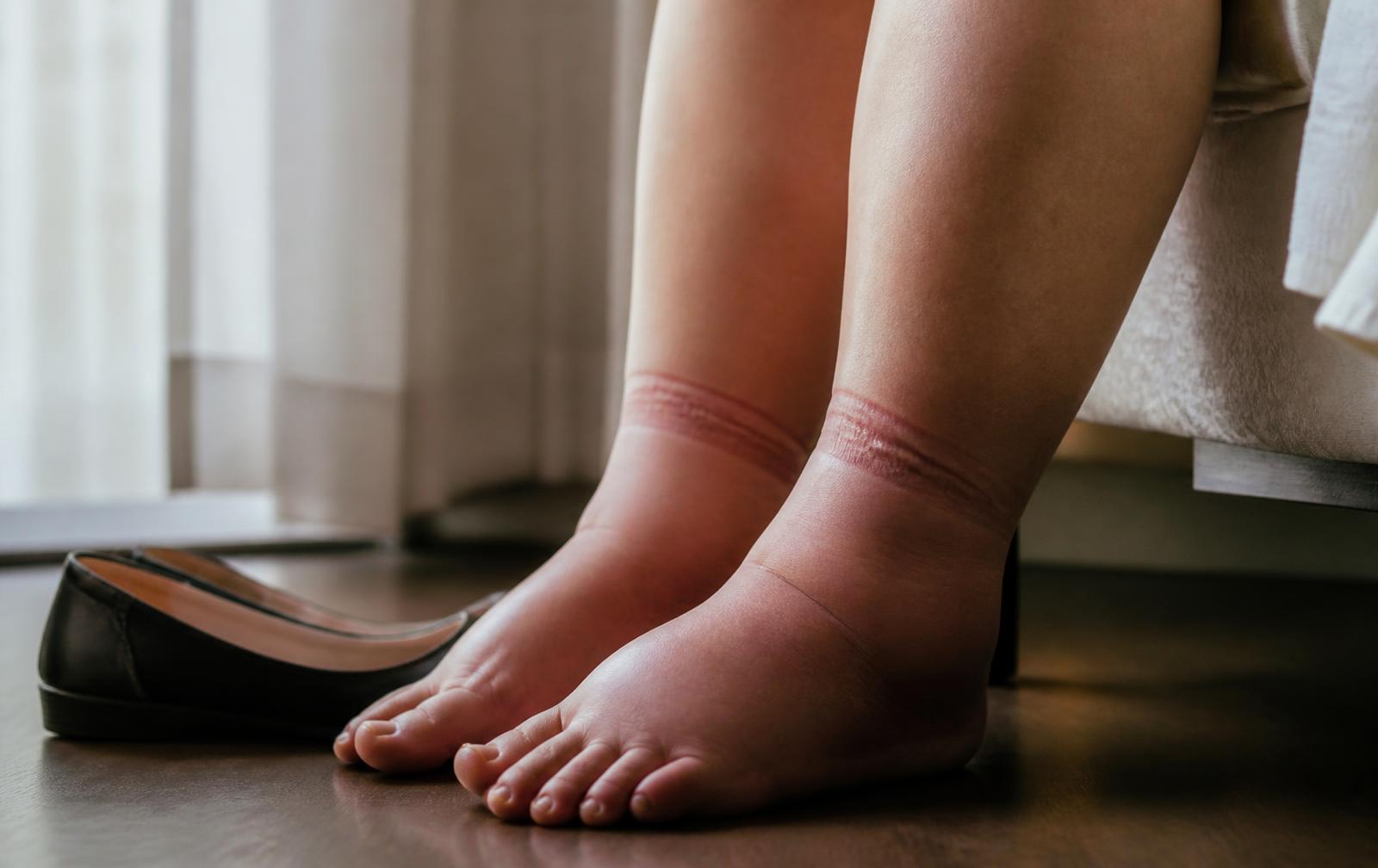
Puffy ankles and pressed-in sock lines after a long day on your feet — or in a chair.
You didn't do anything unusual today. You went to work. You stood, or you sat. You came home.
So why do your shoes feel a size smaller than they did this morning? Why are there sock lines pressed into your ankles? Why does the last two hours of the day feel like wading?
It's fluid, and it goes exactly where gravity tells it to.
Do any of these sound familiar?
- Shoes that fit at 8am and feel tight by 3pm
- Sock marks pressed into your ankles at the end of the day
- Legs that feel heavy, dense and tired for no obvious reason
- Puffy ankles after a long flight, a long shift or a long meeting
- Standing back up after sitting and your feet feel like they belong to someone else
- Evening plans you quietly cancel because you just want to lie down
- Waking up fine, and watching it come back again by the afternoon
Three or more? You're not imagining it, and you're very much not alone.
Fresh
Shoes fit. Ankles look like ankles. You've forgotten yesterday already.
Building
Fluid follows gravity while you stand or sit still. The first tightness in the strap.
Heavy
Legs feel dense. You slip a heel out under the desk. Sock marks start showing.
Done
Feet up, shoes off, nothing left in the tank — and tomorrow starts the same way.
Illustrative comfort comparison. Everyday swelling patterns vary from person to person.
Free US shipping · 30-day money-back guarantee · No return required
It isn't weight. It's fluid — and gravity is the reason it lands in your feet.
Your legs move fluid upward against gravity, and they have no pump of their own to do it. The calf muscle does the work every time it contracts.
Stand still for eight hours and it barely contracts. Sit still for eight hours and it barely contracts either. Fluid pools where gravity puts it: your ankles, your feet, the top of your shoe.
That's why the mirror looks fine in the morning and your shoes don't fit by four.
If you're a woman between 20 and 40, this is overwhelmingly your problem.
Orthostatic and idiopathic edema — swelling that shows up with upright posture and has no other identifiable cause — is reported almost entirely in women, with the great majority between roughly 20 and 40 years old, and a smaller share older.
It is not a sign that you're unfit, overweight or doing something wrong. It happens to nurses who walk 15,000 steps a shift and to people who barely leave a chair. Long and still is the common thread, not lazy.

The physical cost is real, and it's daily.
Tight shoes. Aching arches. Ankles that feel stiff when you stand back up. Legs that stop cooperating at the exact hour the day gets demanding — the school run, the second half of a shift, dinner, the walk to the car.
You start choosing shoes by how forgiving they are. You stop wearing the ones you like. You plan around your feet without ever saying that's what you're doing.
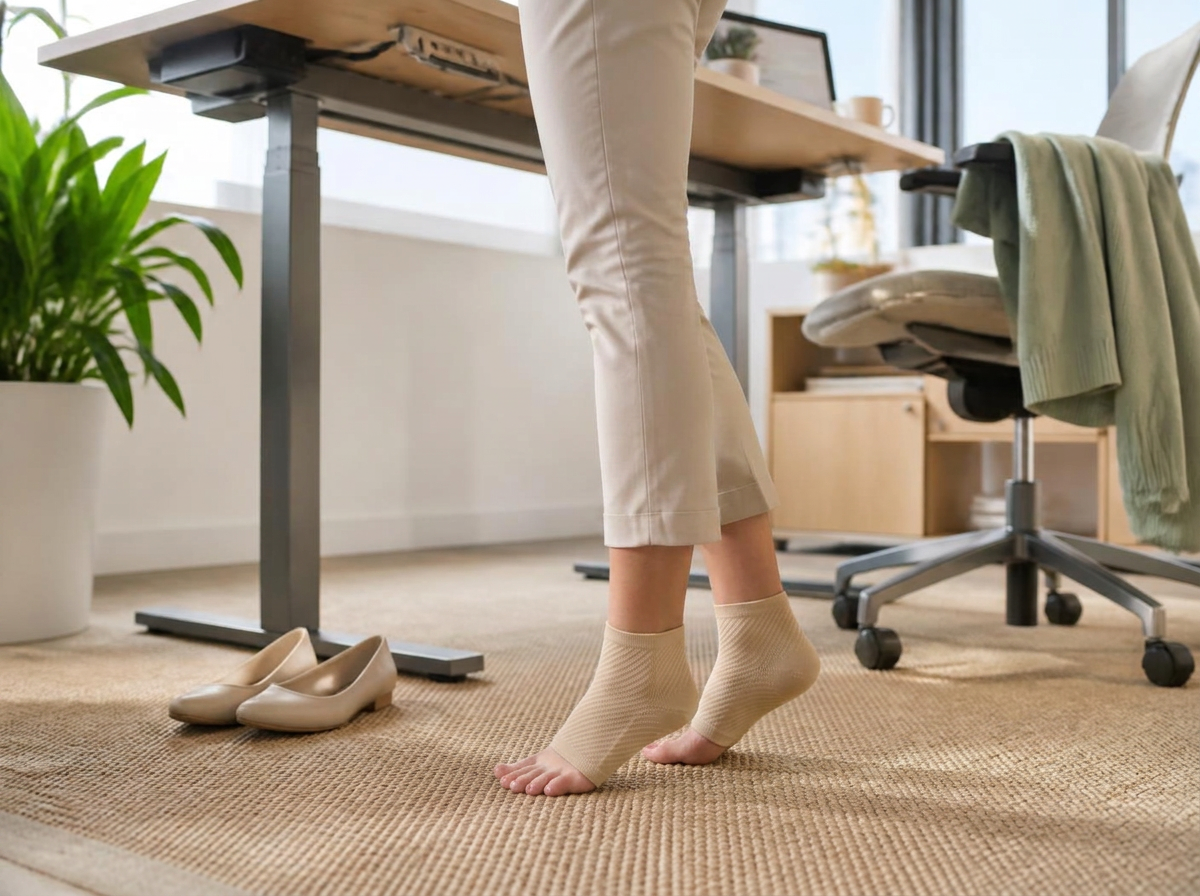
The mental cost is the part nobody mentions.
Discomfort you can't explain is exhausting in a different way. You feel puffy in photos. You feel older than you are. You're irritable by evening and you don't know why until you take your shoes off.
Then comes the quiet withdrawal: the drinks you skip, the walk you don't join, the plans you cancel because standing for another two hours sounds unbearable. That's the part that adds up over months.

Everything you've tried works for an hour.
Feet up on the sofa. Extra water. Cutting salt. Rolling your foot on a frozen bottle. A quick walk around the office. All of it helps — for as long as you're doing it.
None of it helps at 2pm, on your feet, in the middle of your actual day. That's the gap.
It takes 30 seconds. 30-day money-back guarantee.
Medical-grade compression works. Almost nobody keeps wearing it.
Strong compression is uncomfortable, difficult to pull on, obviously medical-looking and hot. So it gets worn once, hated, and left in a drawer.
A garment that stays in the drawer does nothing. The only support that helps you is the support you'll still be wearing on a Tuesday in month three.
That's the whole idea behind FlowSocks: gentle enough to forget you're wearing them.
FlowSocks are deliberately mild. A 240-needle jacquard knit in 80% nylon and 20% spandex, cut short-tube, thin enough to disappear under socks, sneakers, boots and flats.
They hug the foot and ankle evenly, so your legs feel held rather than squeezed — supportive, not restrictive. You put them on with your socks at 7am and you don't think about them again.
No mmHg claims we can't stand behind. No medical promises. Everyday comfort apparel, described plainly.
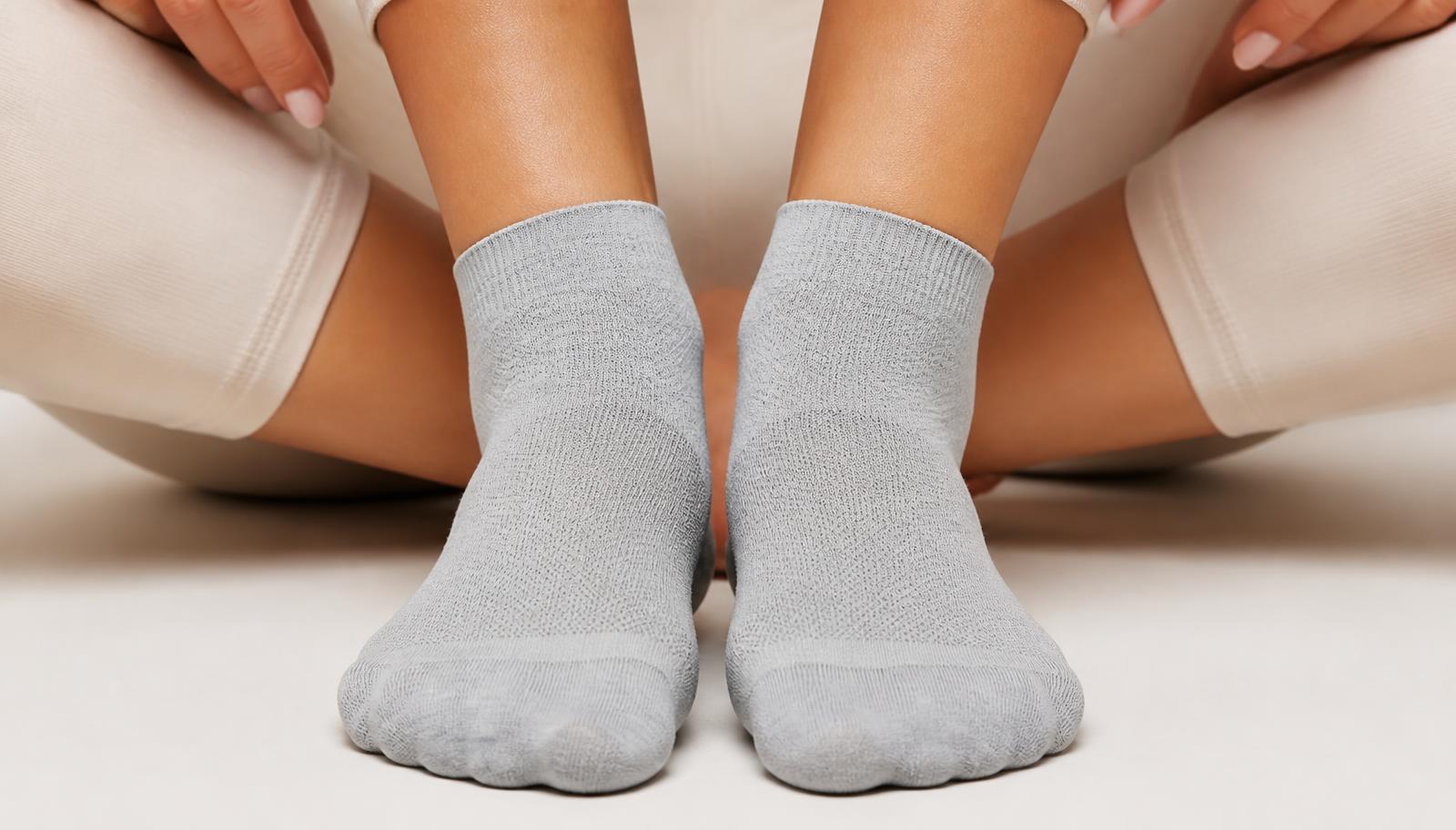
The difference shows up at 6pm, not at 8am.
You won't feel fireworks when you put them on. That's the point — you feel almost nothing.
What you notice is the evening: sitting down without that heavy, tight-shoe feeling waiting for you. Getting home with something left. Wearing the shoes you actually like on a long day.
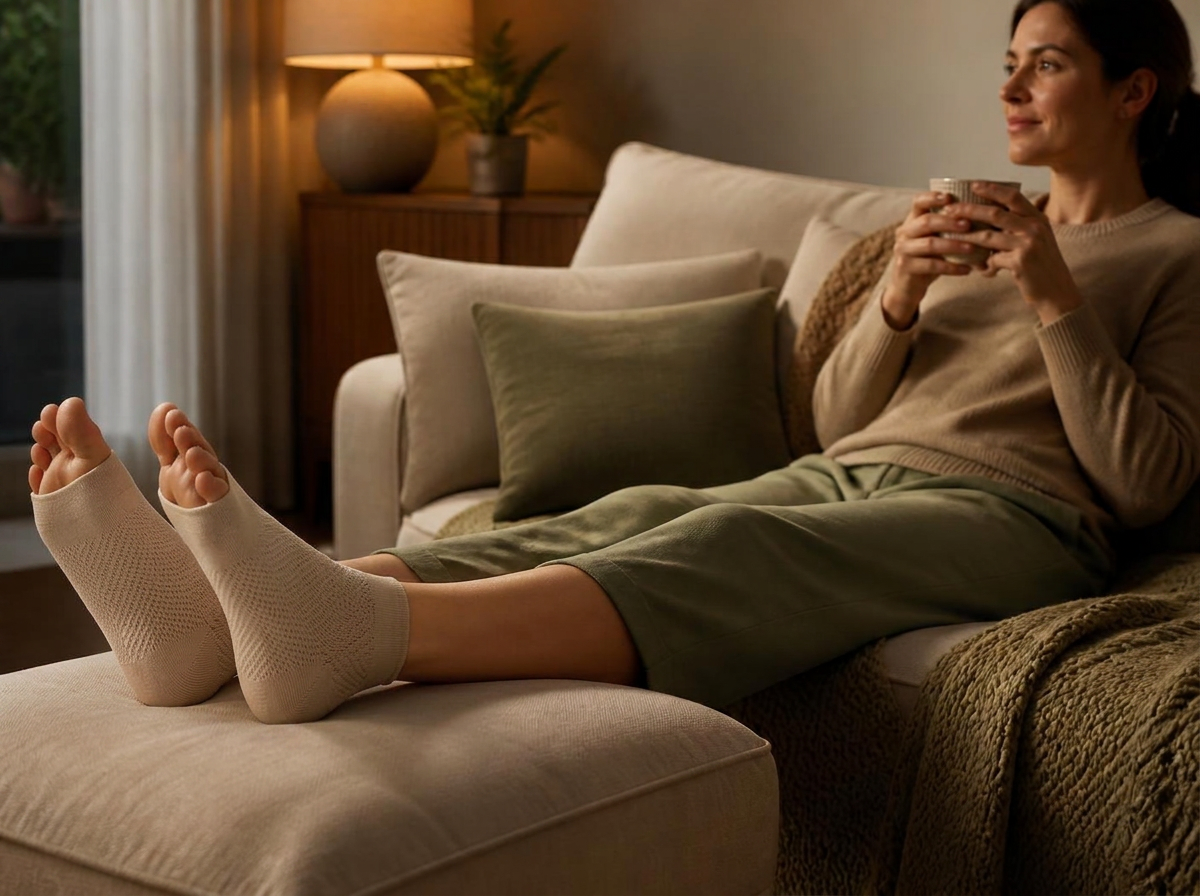
It only works if it becomes a habit — which is why most people don't buy one pair.
One pair tells you how they feel. Two or three means there's always a clean pair ready for tomorrow, and that's the point at which people stop thinking about it and just wear them daily.
Bundles bring the price down to $16 or $13.60 a pair, and both include The Light Legs Blueprint — our digital guide to daily habits for lighter-feeling legs — free.

And if it doesn't work? Simply refund it within 30 days and we will give you back every penny.
Wear them to work. Wear them on a flight. Wear them through a double shift. If they're not for you, email us within 30 days of purchase and we'll refund you in full — and you don't need to send anything back.
You keep the socks. The only thing you can lose here is another six months of 4pm.
Free US shipping · 30-day money-back guarantee · No return required
A typical long day
- Shoes feel tighter by mid-afternoon
- Legs heavy and tired after standing
- Ankles puffy after hours of sitting still
- Evening plans start to feel like effort
A long day in FlowSocks
- Feet and ankles feel supported, not squeezed
- A lighter feeling as the hours add up
- Discreet enough to wear with anything
- One habit, repeated daily, with zero effort
Who they were built for
- Nurses and healthcare workers
- Teachers on their feet bell to bell
- Retail and hospitality shifts
- Desk workers seated all day
- Frequent flyers and long-haul travellers
- Active women who want lightweight daily support
What wearers say
“Twelve-hour shifts used to end with me peeling my shoes off in the car. Now I get home and I can still be a person.”
“I fly twice a month and my ankles used to puff up by hour three. First thing in my carry-on now.”
“I expected tight. They feel like a firm hug that stays put. I genuinely forget they're on.”
“Teaching all day, my ankles were awful by last period. Three weeks in and evenings feel normal again.”
Most people don't stop at one pair
One pair is enough to see how they feel. Two or three means there's always a clean pair ready for tomorrow — and that's where the habit actually sticks.
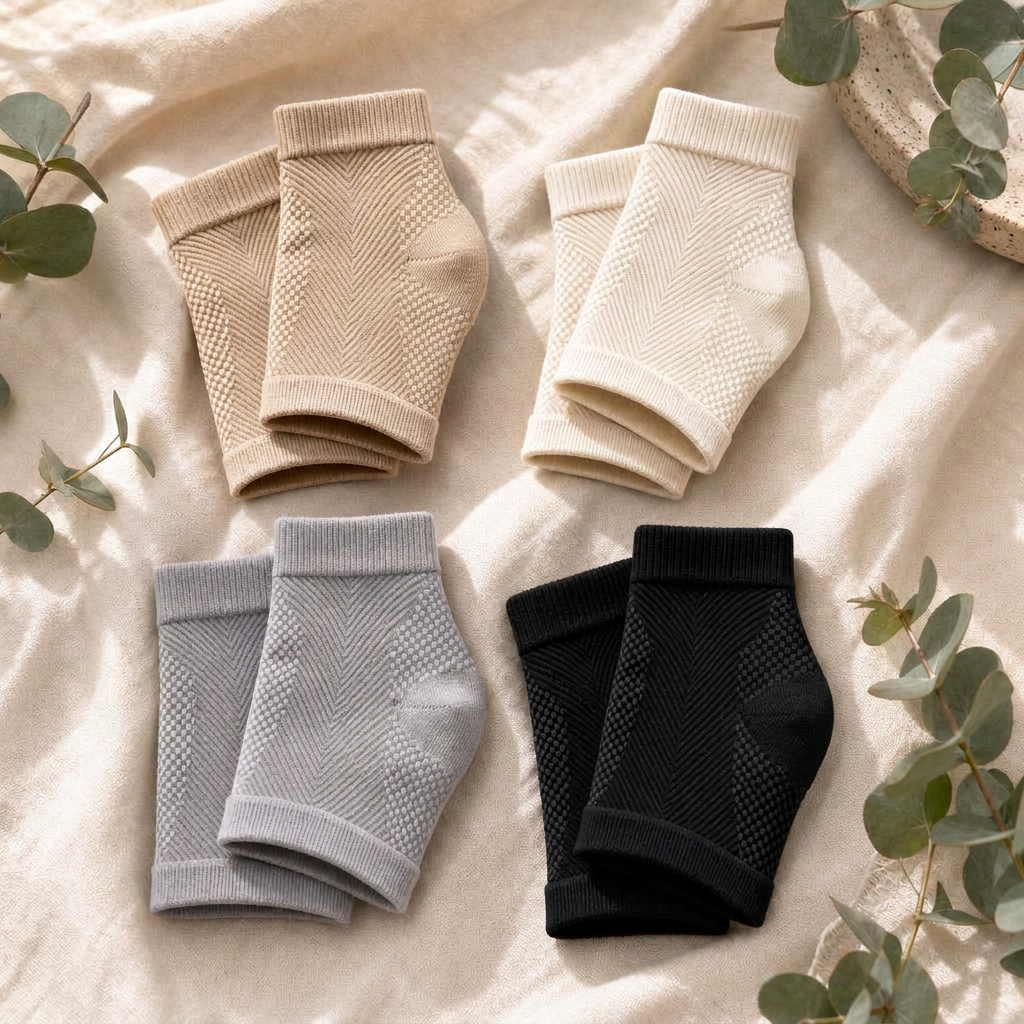
One Pair
1 pair · $32 per pair
$32
Try them
3-Pack
3 pairs · $16 per pair
$48$96
Most popular · Save 50%
5-Pack
5 pairs · $13.60 per pair
$68$160
Best value · Save 57%
And if it doesn't work?
Simply refund it within 30 days and we will give you back every penny — and you don't need to send anything back.
From $32 · Free US shipping · Ships within 3 days
Frequently asked questions
Tomorrow is another long day. Make it a lighter one.
Free US shipping · 30-day money-back guarantee · No return required
*Aquralis FlowSocks™ are everyday comfort apparel, not a medical device. They are intended for general daily comfort and relief only, and are not intended to diagnose, treat, cure or prevent any medical condition. Nothing on this site is medical advice — always consult a qualified healthcare professional about your symptoms. People with conditions affecting arterial blood flow, severe nerve damage (neuropathy), diabetes-related complications, or localised skin infections or open wounds should check with a doctor before wearing compression socks. Discontinue use and seek advice if you experience pain, numbness, discolouration or skin irritation.